Class 1B · Early Detection Rapid ResponsePriority species
Garlic Mustard
Alliaria petiolata
A shade-tolerant biennial that takes over creek bottoms and aspen understory where almost nothing else invades. It releases compounds that disrupt the soil fungi native seedlings depend on, so a stand does damage that outlasts the plants themselves.
- Apr - Jun
- Treatment window
- Class 1B
- Utah designation
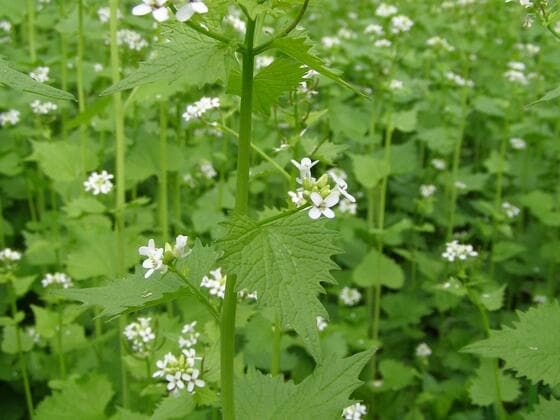
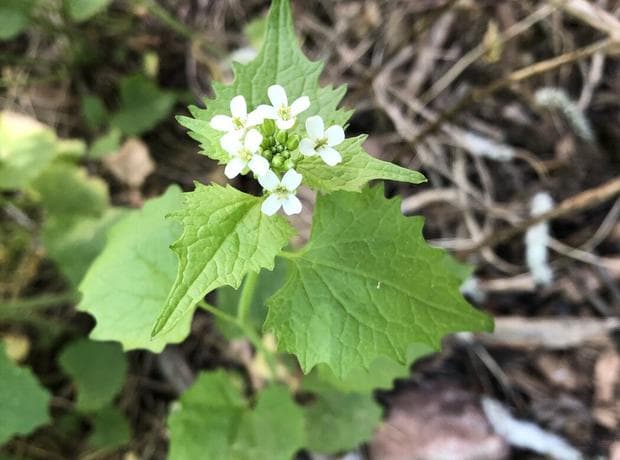
Identification
Four things to check.
- Leaves
- Triangular to heart-shaped with toothed edges. Crushed foliage smells distinctly of garlic.
- Flowers
- Small four-petalled white flowers in clusters at the top of the stem, April into June.
- Seed pods
- Slender upright pods called siliques, each holding a row of small black seeds.
- Habit
- First year rosette, second year bolt to 2-4 feet. Shade tolerant, which is what makes it dangerous.
Control calendar
When to hit it.
Jan
Feb
MarMonitor
AprPeak
MayPeak
JunTreat
JulMonitor
AugMonitor
SepMonitor
OctMonitor
Nov
Dec
Pull from the first green-up through flowering. Once pods form, every plant you disturb scatters seed that stays viable for a decade, so late-season work means bagging, not pulling and dropping.
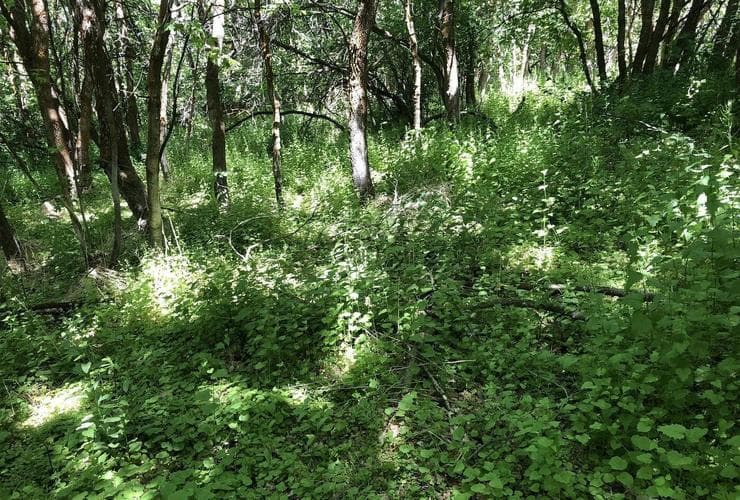
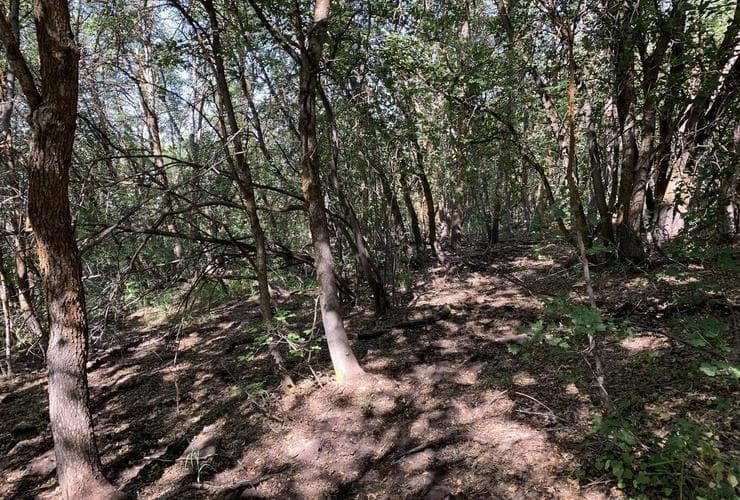
Before and after
Masonic Hill, one season apart.
Integrated management
What works, and what only looks like it works.
| Method | Effectiveness | Notes |
|---|---|---|
| Hand pulling | Best | Pull before seed set, roots and all. Bag everything; do not compost. |
| Mowing | Limited | Only delays flowering. Plants resprout and set seed lower to the ground. |
| Biological | None yet | No approved biocontrol agent is available for garlic mustard in Utah. |
| Chemical | Situational | Spot treatment on dense stands before native understory leafs out. |
| Restoration | Essential | Seed natives immediately. Bare ground after removal is an open invitation. |
Related